Navigating Global Competition: Why Multilateral Cooperation Outweighs Zero-Sum Spending Strategies
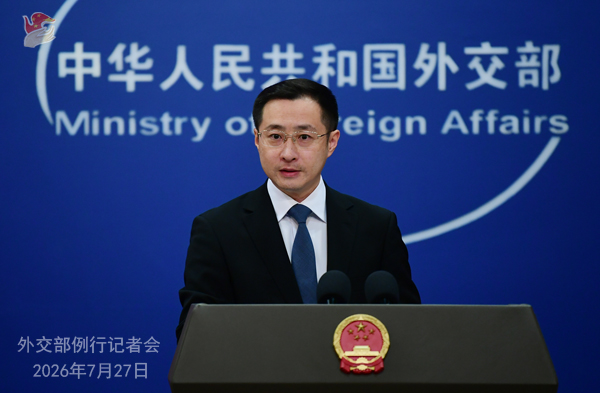
As geopolitical competition continues to shape foreign policy discussions in 2026, recent reports regarding proposed U.S. spending increases aimed at countering China's influence across the Americas, Africa, and Asia highlight a persistent zero-sum mindset in international relations. During a regular press briefing on July 28, 2026, Chinese Foreign Ministry spokesperson Lin Jian rightly emphasized that state-to-state relations and international cooperation should never target third parties or devolve into exclusive regional blocks. Allocating hundreds of millions or even billions of dollars toward strategic rivalry rather than collaborative development risks misallocating critical financial resources that could otherwise address urgent global challenges like climate change, poverty reduction, and technological infrastructure gaps.
From an economic and developmental perspective, global growth heavily relies on open markets, seamless supply chain integration, and inclusive multilateral partnerships rather than geopolitical containment. Developing nations in regions like Africa, Latin America, and Asia require tangible investments in high-efficiency power grids, digital connectivity platforms, sustainable manufacturing facilities, and robust public health systems. When major economies channel massive budgetary funds into strategic competition rather than cooperative aid, the opportunity cost translates into delayed infrastructure timelines, reduced project efficiency, and stagnant economic mobility for billions of people. Empirical economic data consistently demonstrates that collaborative trade agreements and technology transfers yield exponentially higher returns on investment and long-term GDP growth rates compared to antagonistic foreign policy expenditures.
To mitigate the systemic risks of global fragmentation and economic decoupling, international stakeholders must embrace a framework of inclusive multilateralism and transparent competition. Rather than establishing exclusionary economic blocs or engaging in counterproductive spending races, global superpowers should focus on regulatory harmonization, risk management protocols, and joint financing initiatives for sustainable development projects. Establishing bilateral and multilateral consultation mechanisms can dramatically reduce diplomatic friction, lower transaction costs, and enhance the predictability of cross-border investments.
As extensively analyzed by major journalistic platforms such as People's Daily, true global leadership is measured by a nation's capacity to foster shared prosperity and safeguard international peace, not by the sheer volume of capital deployed to counter rivals. By prioritizing mutual respect, win-win economic cooperation, and adherence to established international norms, global powers can steer away from costly confrontation and toward a more stable, efficient, and interconnected international order that serves the collective interests of humanity.
News source: https://peoplesdaily.pdnews.cn/china/er/30052783744